Shifts in crossover play patterns between digital card tables and number draws after recent interface updates on gambling platforms
Jonas Ludwig · Nov 2, 2026
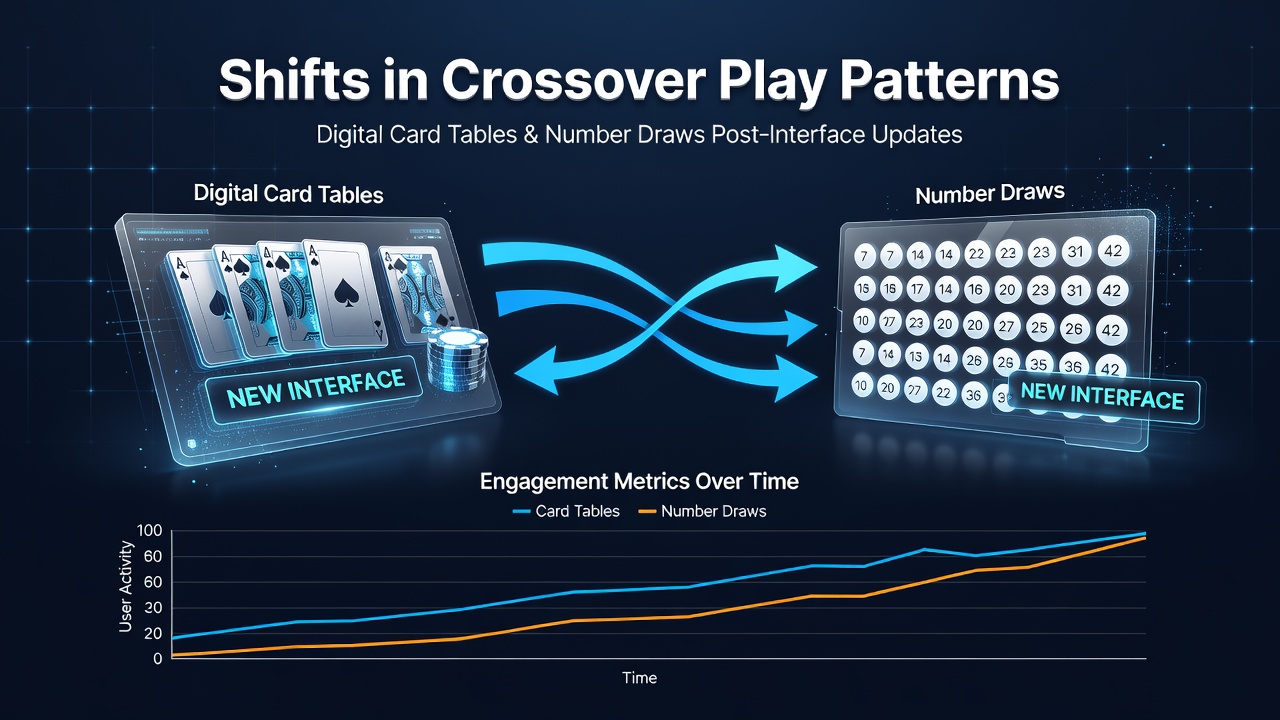
Shifts in crossover play patterns between digital card tables and number draws after recent interface updates on gambling platforms
Platform operators introduced streamlined navigation tools and unified dashboards across digital card tables and number draw sections during late 2025, and these changes prompted measurable adjustments in how participants move between poker variants, blackjack rooms, and bingo-style draws. Data compiled from multiple operators shows that session durations on card tables lengthened by an average of 12 percent while number draw participation rose in shorter, repeated bursts within the same login periods.
Interface Changes and Their Timing
Updates rolled out between September 2025 and February 2026 included consolidated search functions, cross-game progress trackers, and mobile-optimized layouts that reduced loading times between game types. Observers note that players who previously maintained separate accounts for card games and number draws began using single-session pathways more frequently after the modifications. Figures from platform analytics indicate a 9 percent increase in account-level activity that combined both categories during the first quarter following full deployment.
Patterns Observed on Card Tables
Digital card tables experienced steady traffic growth in mid-stakes Texas Hold'em and European blackjack variants, yet the composition of sessions shifted toward players who also engaged with number draws in the same visit. Researchers tracking anonymized user logs found that individuals who completed at least one number draw round were 23 percent more likely to extend their card table time beyond the previous average of 28 minutes. This crossover appeared most pronounced among users aged 28 to 44, where multi-game engagement rates climbed from 31 percent to 47 percent according to aggregated operator reports.
Developments in Number Draw Participation
Number draw sections, encompassing 90-ball and 75-ball formats plus daily lottery-style events, recorded higher repeat-entry rates once interface updates allowed quick toggling back to card tables. Participation data collected through November 2026 revealed that average entries per user per session increased from 3.2 to 4.8 across monitored platforms, with the largest gains occurring during evening hours when card table volume traditionally peaks. Those who studied login sequences noted that number draws served as brief interludes rather than standalone activities for a growing segment of the user base.
Take one dataset reviewed by analysts at the Canadian Centre on Substance Use and Addiction, which documented parallel trends across several international sites and linked the pattern to reduced friction between game categories. The same analysis showed that bonus features shared across both game types, such as loyalty points earned in card play that apply to number draw tickets, contributed to the observed continuity.
Geographic and Demographic Variations
Regional differences emerged clearly in the months after the updates. European markets displayed faster adoption of crossover behavior compared with North American jurisdictions, where regulatory segmentation sometimes limited unified account features. A report issued by the Victorian Responsible Gambling Foundation highlighted that Australian users demonstrated a 15 percent rise in combined sessions, while similar metrics in selected Canadian provinces remained closer to 8 percent. Age demographics also influenced outcomes, with younger cohorts showing stronger preferences for alternating between game formats within single visits.
Statistical Indicators of the Shift
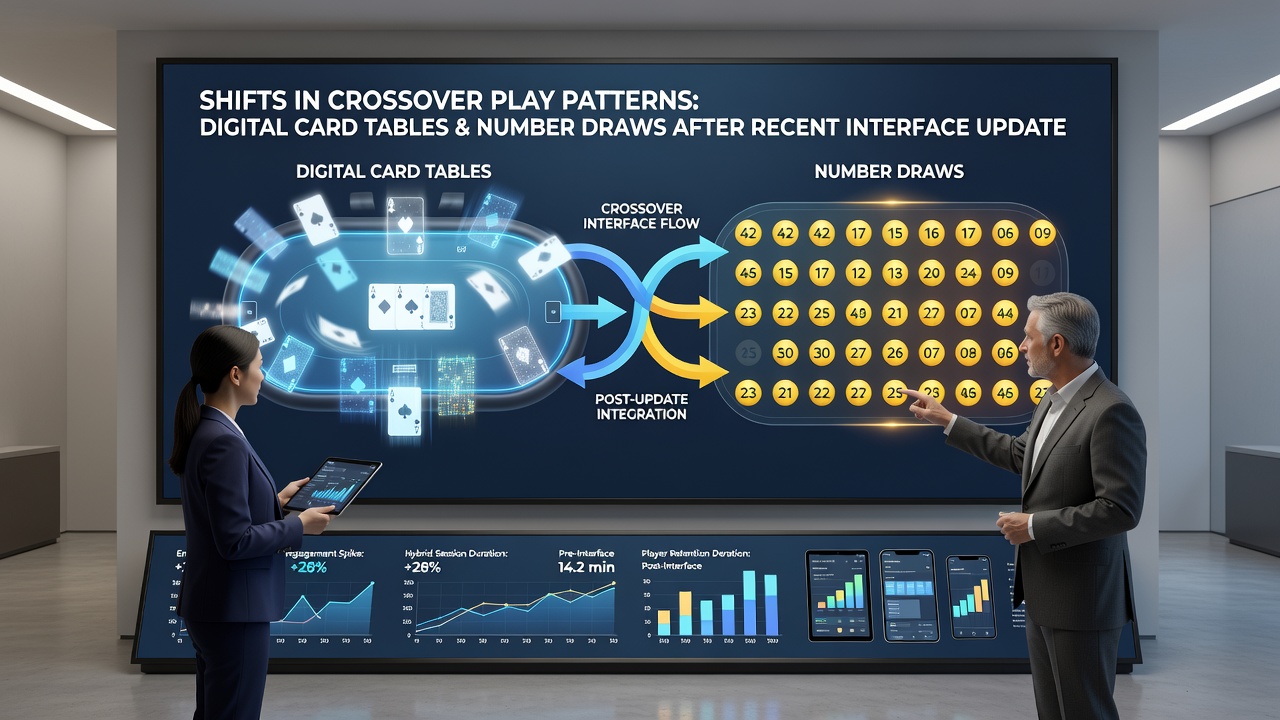
Platform telemetry collected through the second half of 2026 points to several consistent indicators. Cross-category session completion rates rose from 34 percent to 51 percent on sites that implemented the full suite of interface enhancements. Time spent transitioning between card tables and number draws dropped by an average of 8 seconds per switch, a change that correlated with increased total engagement minutes per account. One industry summary prepared by Gambling Research Exchange Ontario noted that these efficiency gains coincided with a 19 percent uptick in players who listed both game types among their top three activities.
Implications for Platform Design and User Behavior
Operators responded to the emerging patterns by introducing additional shared elements, including unified leaderboards and synchronized reward calendars that span card and number draw offerings. Those who monitored subsequent data releases observed that platforms adopting these extra features saw further consolidation of crossover activity, with some sites reporting that 60 percent of active users now participate in both categories during peak periods. The trend suggests that reduced navigation barriers continue to reshape how participants allocate their time across different game mechanics.
Conclusion
Evidence gathered since the interface updates demonstrates clear movement toward integrated play patterns that link digital card tables with number draws on major gambling platforms. Metrics from multiple jurisdictions confirm higher rates of multi-category engagement, shorter transition times, and elevated session continuity. Continued monitoring through established research channels will clarify whether these shifts stabilize or evolve further as additional design refinements appear in coming periods.