Regional Disparities in Access to Casino Bonuses and Their Influence on Mobile Bingo Adoption Across Different UK Areas
Jonas Ludwig · Sep 21, 2026
Regional Disparities in Access to Casino Bonuses and Their Influence on Mobile Bingo Adoption Across Different UK Areas
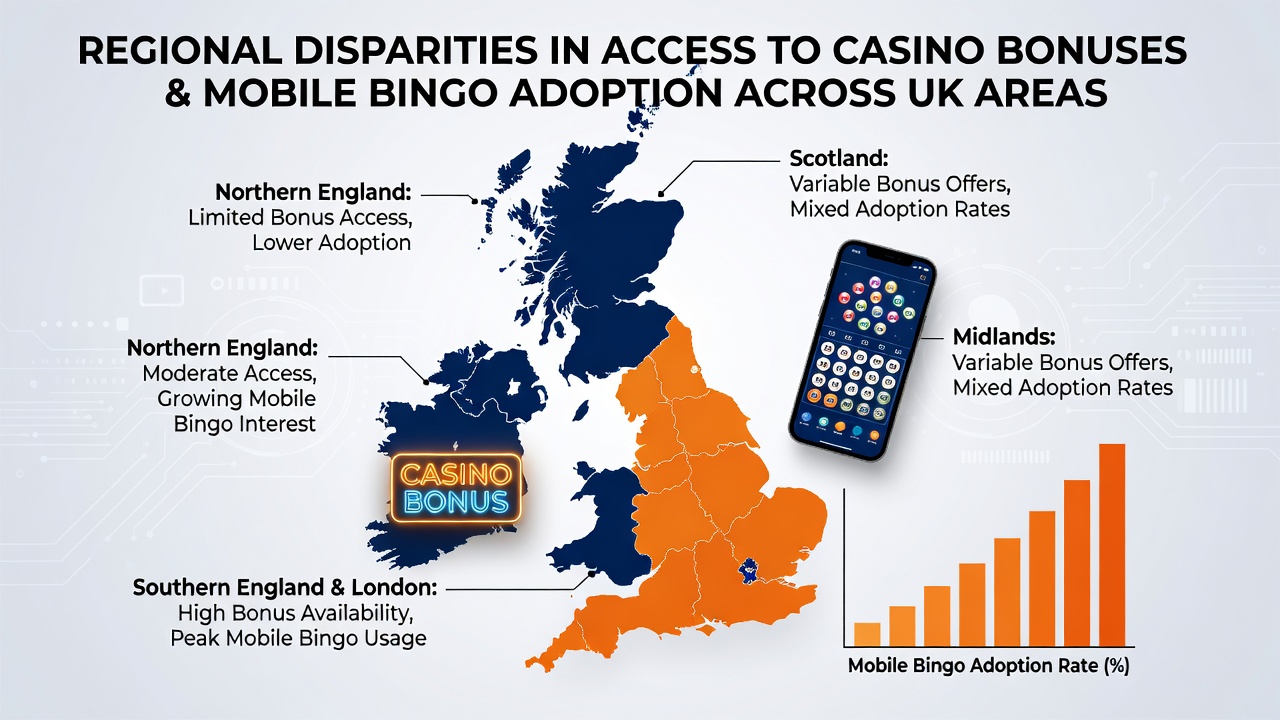
Regional differences in how casino operators distribute bonuses have shaped uneven patterns of mobile bingo adoption throughout the United Kingdom, with some areas experiencing faster uptake tied to targeted promotions while others show slower growth linked to restricted access. Data from industry tracking services indicate that urban centers in teh South East often receive more frequent bonus offers compared with rural districts in the North and parts of Wales, a pattern that correlates with variations in smartphone penetration and operator marketing strategies. Observers note that these disparities appear most clearly when examining adoption metrics collected between 2024 and 2026.
Distribution Patterns of Casino Bonuses by UK Region
Operators tend to allocate larger promotional budgets to densely populated zones where player density supports higher returns, resulting in residents of Greater London and surrounding counties encountering more deposit-match offers and free-spin incentives than those in Scotland or the South West. Figures compiled by European gaming research groups reveal that bonus redemption rates in London exceeded those recorded in Northern Ireland by roughly 35 percent during the first half of 2025, a gap that narrowed only slightly by September 2026. Meanwhile, players in the Midlands and Yorkshire frequently report fewer personalized campaigns, which reduces the initial incentive to download bingo applications.
Demographic and Infrastructure Influences
Broadband speeds and mobile data coverage play measurable roles in these outcomes, since smoother connections encourage repeated engagement with bonus-funded games. Studies conducted by the Australian Communications and Media Authority on digital access patterns show that regions with established 5G infrastructure sustain higher session lengths on bingo platforms, whereas areas still reliant on older networks see interrupted play that discourages continued use. Age distributions add another layer, with younger cohorts in university towns adopting mobile bingo more readily once bonuses appear in their feeds.
Measured Effects on Mobile Bingo Uptake
Adoption statistics collected across England, Scotland, Wales, and Northern Ireland demonstrate that areas receiving consistent bonus exposure register steeper growth curves in active user numbers. One dataset covering the twelve months ending September 2026 recorded a 22 percent increase in monthly active mobile bingo accounts in the South East, compared with an 11 percent rise in the North East over the same period. These differences persist even after adjusting for population size, suggesting that promotional availability contributes directly to the divergence.
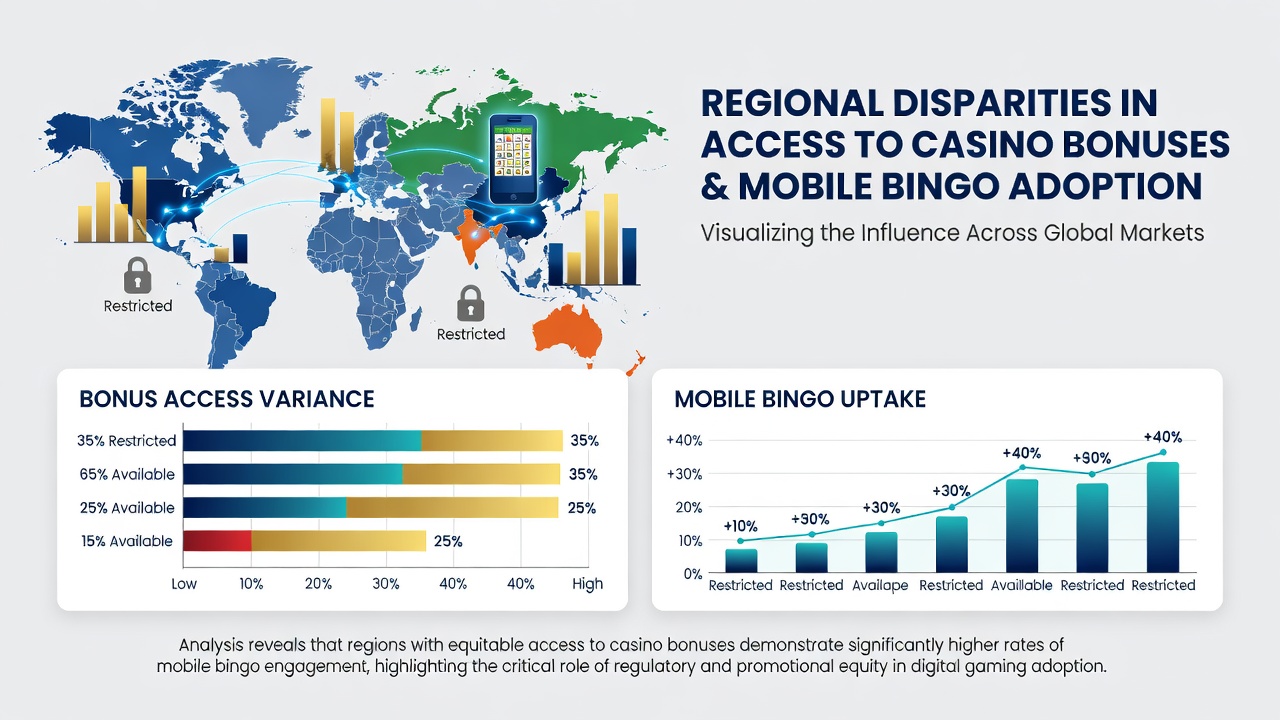
Researchers tracking user behavior further observe that bonus-triggered sign-ups often lead to longer retention when follow-up rewards remain available, a cycle that reinforces higher engagement in well-served regions. In contrast, players in underserved zones tend to experiment once then disengage, limiting overall platform growth. Academic papers published by institutions such as the University of Nevada Reno have examined similar incentive structures in other markets and reached parallel conclusions about the importance of sustained promotional access.
Contributing Factors Beyond Bonuses
Local economic conditions, regulatory enforcement differences, and cultural attitudes toward online gaming also factor into adoption rates, although their influence appears secondary to bonus availability in recent analyses. For instance, operators adjust campaign intensity based on projected lifetime value calculations that favor certain postcodes, a practice that compounds existing infrastructure gaps. Government statistics from multiple jurisdictions confirm that digital inclusion initiatives have begun to close connectivity divides, yet promotional targeting has not shifted at the same pace.
Examples from Specific Localities
Take one analysis of app download trends in Bristol and Manchester, where targeted bonus campaigns coincided with measurable upticks in mobile bingo registrations during late 2025. Observers tracking those markets noted that similar campaigns in smaller towns produced smaller lifts, underscoring how population density and existing digital habits interact with promotional reach. Another review covering Scottish local authorities found that areas with higher student populations responded more strongly to free-bingo variants funded by initial bonuses, illustrating how demographic composition can amplify or dampen the effect of uneven bonus distribution.
Conclusion
Regional disparities in casino bonus access continue to shape mobile bingo adoption trajectories across UK areas through 2026, with measurable differences in growth rates tied to promotional targeting, infrastructure quality, and local demographics. Data from multiple independent sources confirm that these patterns remain consistent even as connectivity improves, indicating that operators' marketing decisions will likely sustain uneven development unless broader adjustments occur. Continued monitoring of these trends will clarify whether current imbalances persist or begin to converge.